Wednesday, 8 August 2018

The new Anki Vector robot is smart enough to just hang out

the table before me are two diminutive robots, each emitting endearing little robot beeps and bloops, their screen eyes active. When I knock on the table, one of them turns to face the noise with surprising alacrity. The other just watches my face, turning slowly to keep me in focus as I move around.
These are prototypes for Vector, the latest robot from Anki, the company behind both the Cozmo and the Overdrive RC cars. I spent the day in Anki’s labs in San Francisco to learn just what Vector is and — critically — what it can do. When it ships in October for $249.99 (or cheaper for early Kickstarter backers), Anki will be marketing it as a “home robot.” It’s a sort of Cozmo for adults, a step beyond that robot’s learn-to-code toy ethos.
You can ask it questions, play games with it, and even pet it to elicit a chirpy little purr. But Anki doesn’t want you to focus on Vector’s functionality. The company has been putting a lot of effort into its personality. And because Vector is completely autonomous, you can do something completely surprising for a new piece of technology: just ignore it, and let it do its own thing.

Tuesday, 7 August 2018

The Army is buying microwave cannons to take down drones in mid-flight

The US Army has a new plan for microwaving drones out of the sky. In a public solicitation last Friday, the agency announced its intention to purchase an airborne high-powered microwave system from Lockheed Martin, which is intended for use against drones. The weapon, which would be mounted to an airplane, would disable fixed-wing or quadcopter drones with a beam of focused radiation.
Drone countermeasures are particularly relevant in the wake of an apparent assassination attempt against Venezuelan president Nicolás Maduro that was carried out by a pair of hexacopter drones rigged with remote-triggered explosives. Public video collected by Bellingcat indicates the attack was carried out by drones similar to DJI’s Matrice 600. Each drone was equipped with a kilogram of C4 explosive, according to a statement by Venezuelan security forces. The Matrice 600’s maximum carrying capacity is 5.5 kilograms.
The Army’s new system comes on the heels of a similar microwave system that was developed by Lockheed Martin for the Air Force called the Self-Protect High Energy Laser Demonstrator or “SHiELD.” Intended for use against incoming missiles, the project was the subject of a $26 million design award in November 2017.

Monday, 6 August 2018

Android 9 Pie is available for Google Pixel phones today

Google has announced that the final, shipping version of the newest Android update is available for all Pixel phones today. And, as usual, it has announced a name to go along with the over-the-air update: “Android 9 Pie.”
Android 9 Pie’s headline features are the same ones that we revealed back in May: a “Digital Wellbeing” dashboard, a new gesture-based navigation system, and other AI-enhanced improvements to the UI. It also received many subtle improvements to the overall look of the software, including a new status bar that’s designed to work better with notches.
However, the official release will not include all of the features that Google announced at Google I/O. The main things that will be missing are the Digital Wellbeing features, including the usage dashboard, app times, and a “wind down” setting for when you go to bed. Instead, those features will be offered as a beta for Pixel users right away. The actual release will come in the fall; Google says “Android One and other devices coming later this year.” One can assume that among the “other devices” will be the new Pixel 3 phones.

MoviePass will limit users to just three movies a month starting on August 15th

MoviePass has announced that users will soon be limited to seeing just three movies a month. It’s a major change from the current policy that allows users to see a movie once a day with their subscriptions, via The Wall Street Journal. It’s the latest change to the unlimited moviegoing service as the company desperately tries to stay afloat in the wake of problems like entirely running out of money at the end of July.
The new plan undoes some of the changes that MoviePass announced last week, including the $14.95 price increase and surge pricing. Instead, users on the new plan will be able to continue paying $9.95 per month, although they’ll be limited to just three movies (something that MoviePass previously offered for $7.95).
The new plan goes into effect on August 15th. Monthly subscribers will have the chance to subscribe to the new plan after that date when their current monthly subscription expires, while annual subscribers will be able to keep their existing plan until they’re up for renewal. However, it seems that only subscribers to the new, three-movie-a-month plan will be exempt from MoviePass’ surge pricing and ticket-verification policies.
Also sticking around are the added limitations to seeing newly released movies during the first two weeks of the theatrical run (unless the movie has a promotional deal with MoviePass). That started most prominently two weekends ago with the release of Mission: Impossible — Fallout. Users who are interested in seeing the latest films in theaters right at release will still likely be out of luck with MoviePass going forward.

Friday, 3 August 2018

Apple’s 2018 iPhones are rumored to not include headphone dongle in the box

We all knew this day would come eventually, but apparently 2018 is the year: Apple will reportedly no longer bundle its 3.5mm to Lightning port headphone dongle with this year’s iPhone models, according to a research note from Barclays that was seen by MacRumors.
And while you can take Barclays’ note with a grain of salt, the sourcing does seem at least somewhat legitimate. The research note claims that Cirrus Logic, a supplier for the dongle has “confirmed” that it won’t be included in the box alongside the new iPhones.
Apple has been trying to transition away from wired headphones entirely with its AirPods and lineup of wireless Beats headphones, so the move isn’t entirely surprising. The dongle was always meant as a stopgap while customers adjusted to the new, headphone jack-less reality that Apple imposed on the world. Apple will almost certainly continue to sell the dongle — which costs $9 — separately for users who still want it.

The tiny Microsoft Surface Go is available now, and it’s an overachiever

The Surface Go, Microsoft’s latest 2-in-1, is now shipping. I’ve spent the last couple of days with it, and I have come away more impressed than I would have guessed. It’s a tiny wonder of a computer — with a few flaws — that can do more than I would have given it credit for before I tried it.
The base model of the Surface Go is $399, but the one I’ve been using is the upgraded $549 model. Those prices, however, don’t include the cost of the Surface keyboard, which is pretty much a must-have. The basic keyboard is $100 extra, but you should probably spring for the $130 Alcantara fabric version, which feels quite nice.
Speaking of springing for things: the upgraded version is probably a safer bet than the base model. It has more RAM for running multiple apps, and already, I’ve been sort of shocked at how much can be active at the same time. I’ve had eight or 10 (admittedly lightweight) apps going along with a dozen Edge browser tabs and haven’t had big slowdowns. Heavier apps like Chrome and Adobe Lightroom do struggle a bit more, however.
If I sound pleasantly surprised, it’s because, so far, I really am. Low-end Surface tablets have not been impressive over the years. The original Surface RT ran the doomed RT version of Windows, and the Surface 3 had a woefully underpowered processor. The Surface Go has a chip I didn’t have any experience with — the Intel Pentium Gold 4415Y — but it runs much faster than I expected. Of course, a proper Surface Pro with a Core i5 would do laps around this thing at heavier tasks, but for basic computing, this is sufficient.
The Surface Go ships with Windows S mode on by default, which means that you’re limited to Microsoft’s own Edge browser and apps available in the Windows Store. Though you might take a hit to battery life by running apps like Chrome, I strongly recommend you turn it off. It’s easy (it doesn’t even require a reboot), and it gives you access to essential apps that just aren’t in the Windows Store yet (or anymore, as is the case with the now-yanked Amazon Kindle app).

Thursday, 26 October 2017

Waymos’s self-driving cars are headed to the cradle of the US auto industry

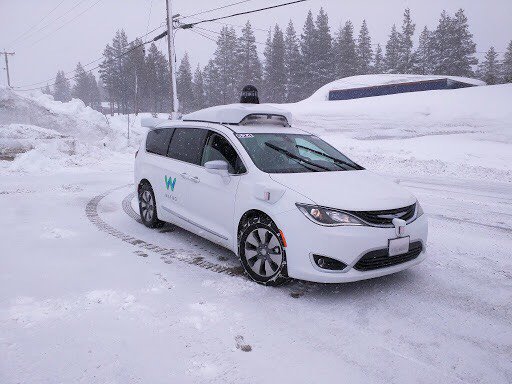
Waymo is bringing its fleet of self-driving cars to Detroit, a city steeped in car history. The Alphabet unit announced today that it would begin testing its autonomous vehicles in Michigan just in time for an icy winter. The goal would appear to be twofold: teach self-driving cars how to handle slippery, unplowed roads; and thumb their nose at the legacy automakers who are scrambling to keep up to Alphabet’s big head start in autonomy.
Starting in November, Waymo’s self-driving cars and minivans will hit the road in and around Detroit, the company says. And like in other tests, a trained safety driver will be behind the wheel to monitor the car’s progress. But it won’t be Waymo’s first foray on dangerously snowy streets: the company has previously tested its vehicles in winter conditions outside Lake Tahoe.
View image on Twitter
 Follow
✔@Waymo
Making snow angels in Tahoe! We’re testing our self-driving Pacificas in cold weather & collecting snow data to train our software
Twitter Ads info and privacy
 
“For human drivers, the mix of winter conditions can affect how well you can see, and the way your vehicle handles the road,” said John Krafcik, CEO of Waymo, in a blog post. “The same is true for self-driving cars. At Waymo, our ultimate goal is for our fully self-driving cars to operate safely and smoothly in all kinds of environments.”
The arrival of Waymo’s autonomous vehicles may, however, send a shiver up the spine of Detroit’s Big Three: Ford, GM, and Fiat-Chrysler. (Though probably not the latter, which has sold its Chrysler Pacifica minivansto the company for its fleet.) Waymo made its first appearance in the cradle of the US auto industry last year, when it opened its 53,000-square-foot self-driving technology development center in Novi. Last January, the company took the stage at the North American International Auto Show to unveil for the first time its self-driving minivans. So it was probably only a matter of time before the company began testing in Detroit too.
To be sure, most of the legacy automakers are testing their own self-driving cars, but Waymo has a significant lead, having been working on the technology long before the company spun out of Google in late 2016.
Michigan Governor Rick Snyder used the occasion to recast the state’s place in the rapidly shifting auto market. “It’s great that a leader in autonomous vehicle development is going to expand its work in Michigan — the center of the rapidly expanding mobility industry,” he said in a statement. “Waymo clearly shares our concern for and commitment to safety for Michigan residents. I’m proud that Waymo chose Michigan to expand its testing as they take their self-driving vehicles into the next phase.”
Waymo already has vehicles on the road in Mountain View, California; Austin, Texas; Kirkland, Washington; and Phoenix, Arizona. The latter city is also playing host to Waymo’s ride-hailing pilot, in which real people can sign up to use the minivans for daily trips. The company is reportedly getting closer to launching its first commercial venture too.